What Is It?
This campaign is designed to help families, friends, and community members approach difficult topics with compassion and clarity—while keeping connection at the center. You don’t need perfect words or professional training to start. What matters most is showing up with patience, listening without judgment, and staying steady over time.
As we continue this campaign into 2026, MACC will share more tools and learning opportunities to support families and loved ones, including downloadable resources, conversation tips, and community-based events that encourage follow-through and connection to support.
A Caring Conversation Starts Here
You don’t need perfect words to make a meaningful connection. Explore practical tips, conversation starters, and resources to help you support someone you care about.
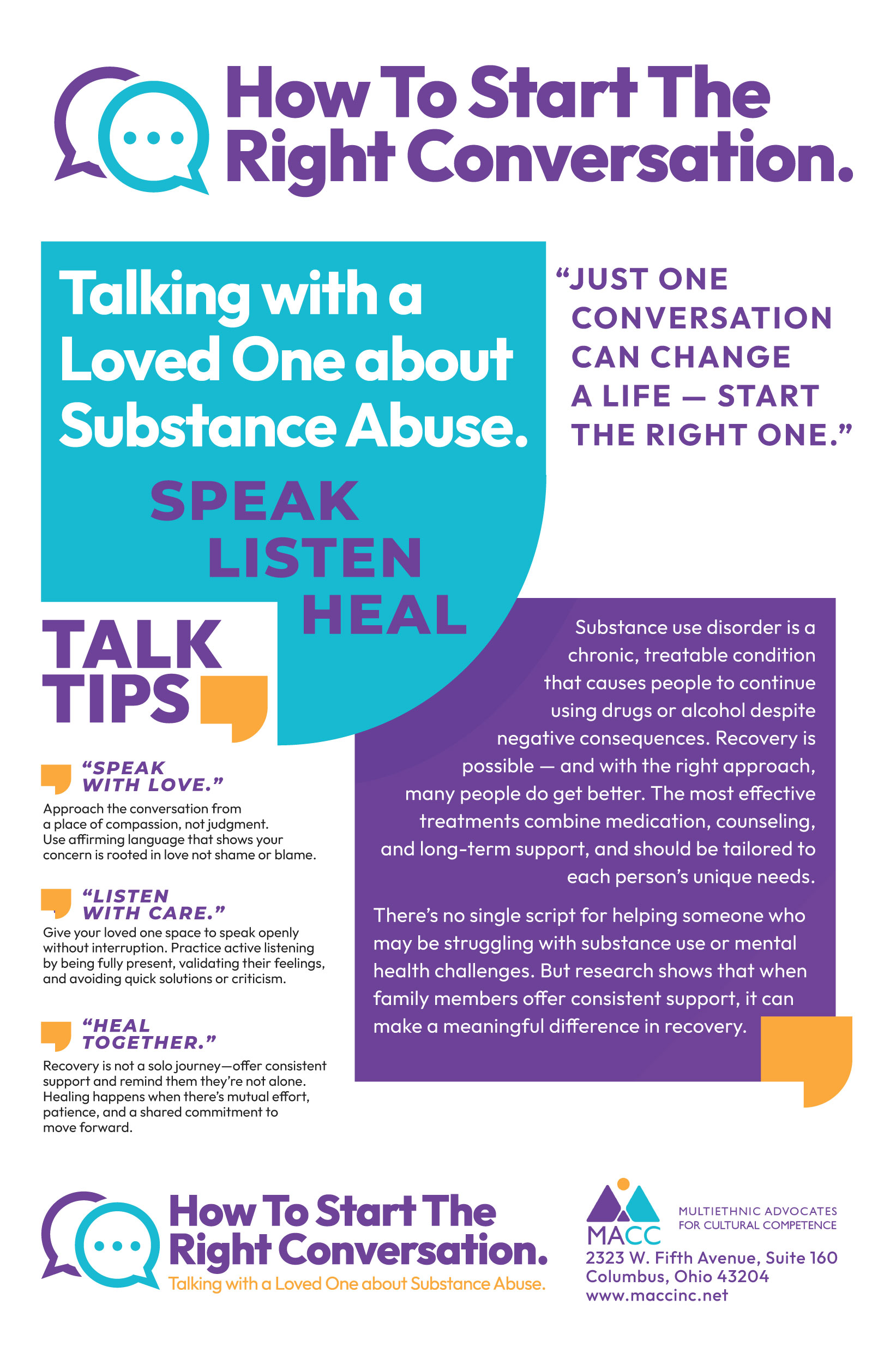
Speak. Listen. Heal.
Speak with Love
Approach the conversation with compassion. Use language that communicates care and concern, and avoid shame, blame, or labels.
Listen with Care
Give your loved one space to speak without interruption. Be present, acknowledge their feelings, and resist the urge to immediately offer solutions.
Heal Together
Remind your loved one that they are not alone. Offer consistent support, recognize that recovery takes time, and work together to identify helpful next steps.
How to Start the Conversation
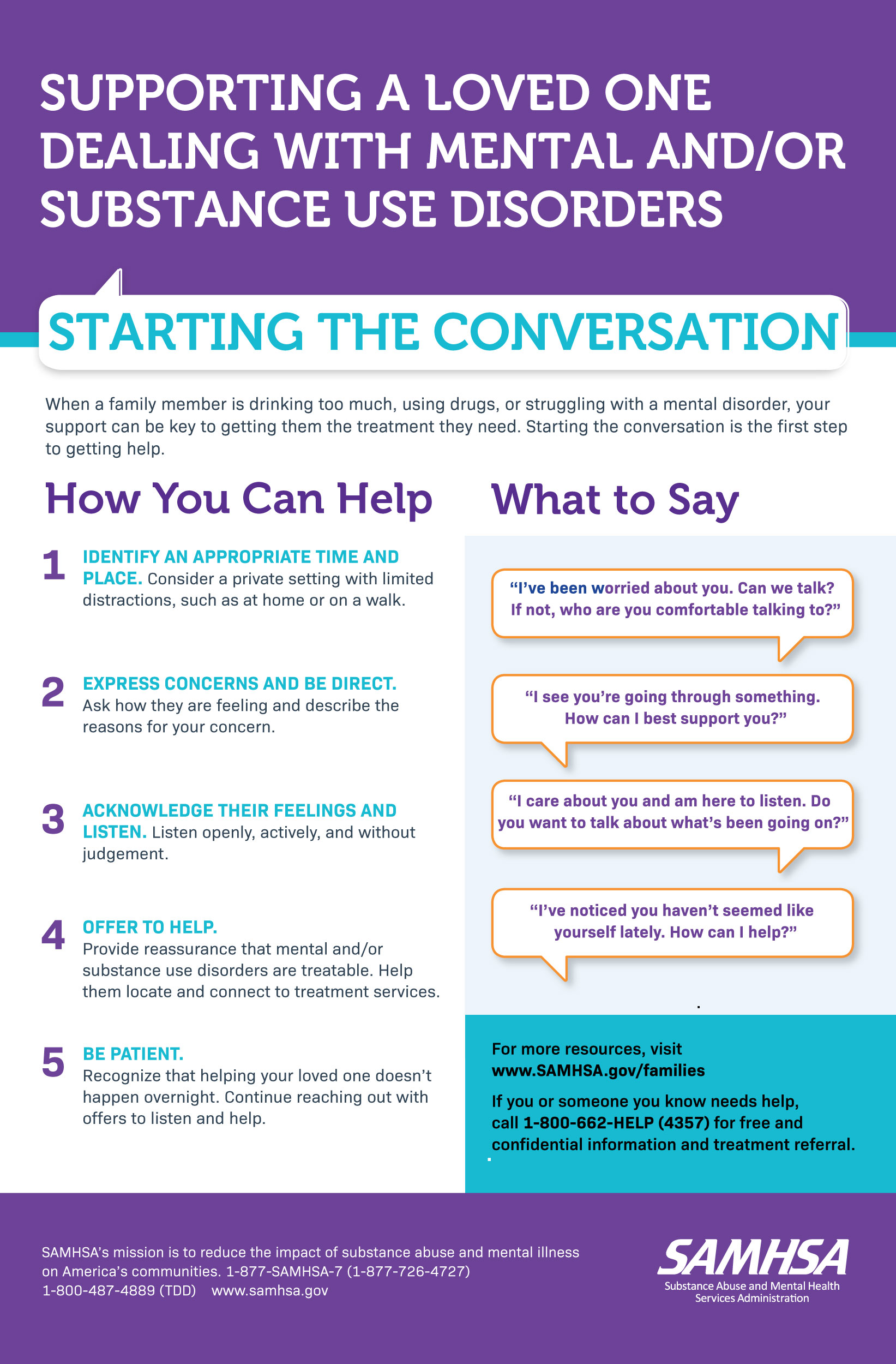
- Choose an appropriate time and place. Find a private, comfortable setting with limited distractions, such as at home or during a walk.
- Express your concerns clearly. Ask how they are feeling and share specific observations that have concerned you. Keep the focus on their well-being.
- Acknowledge their feelings and listen. Listen openly and without judgment. Allow them to describe their experience in their own words.
- Offer practical help. Ask what support would be useful. You might offer to explore treatment options together, help make a call, or accompany them to an appointment.
- Be patient and stay connected. They may not be ready to talk or seek help right away. Continue offering opportunities to connect without pressuring them.
What to Say
“I’ve been worried about you. Can we talk? If not, who would you feel comfortable talking to?”
“I see you’re going through something. How can I best support you?”
“I care about you and am here to listen. Do you want to talk about what’s been going on?”
“I’ve noticed you haven’t seemed like yourself lately. How can I help?”
Understanding Substance Use and Recovery
Substance use disorders are treatable health conditions that can involve continued use of alcohol or other drugs despite harmful consequences. Recovery is possible, and care should reflect each person’s needs. Treatment may include counseling, medications when appropriate, and recovery support.
There is no single script or timeline for recovery. Staying connected and helping someone explore care can be meaningful ways to support them. You do not have to manage their recovery alone.
Respect Culture, Identity, and Individual Needs
Ask what would help your loved one feel comfortable seeking support. Consider their language preferences, cultural values, family relationships, and past experiences with care. When exploring services, ask about interpretation, accessibility, and providers’ experience serving their community.
Support for Families and Caregivers
Your well-being matters, too. Make time for your own support, set healthy boundaries, and consider connecting with a family or caregiver support group. You can care deeply about someone while recognizing the limits of what you can do on your own.
Get Help and Find Resources
Immediate and Crisis Support
988 Suicide & Crisis Lifeline: Call or text 988, or chat online, for free, confidential support available 24 hours a day, seven days a week. You can also reach out if you are concerned about someone else.
If someone is in immediate physical danger or experiencing a suspected overdose or another medical emergency, call 911.
Treatment and Referral Services
SAMHSA National Helpline: Call 1-800-662-HELP (4357) for free, confidential treatment referrals and information, available 24/7 in English and Spanish.
Learn about the SAMHSA National Helpline
FindTreatment.gov: Search for mental health and substance use treatment services.
Family Education and Support
SAMHSA Family Resources: Explore information about helping a loved one and coping with mental health and substance use challenges.
Explore SAMHSA family resources
NAMI Ohio: Find peer-led support groups for individuals and for family members, partners, and friends of people with mental health conditions.
Explore NAMI Ohio support groups
Overdose Prevention in Ohio
Naloxone Ohio: Learn about naloxone, a medication that can reverse an opioid overdose, and find options for obtaining free naloxone in Ohio.
Keep the Conversation Going
A meaningful conversation does not have to be perfect. Begin with care, make room to listen, and remind your loved one that support is available.
Speak with Love. Listen with Care. Heal Together.
Bring the Conversation to Your Community
Meaningful conversations can begin in families, neighborhoods, schools, faith communities, and workplaces.
Interested in exploring a community conversation with MACC? Contact us to discuss your community’s interests and needs. On the contact form, select “Request a Community Conversation/Summit.”